
Caitlin Johnston
SELF-TAUGHT BY THE SEA By Matt Mortimer It is said that if you make a job out of what you love,…

SELF-TAUGHT BY THE SEA By Matt Mortimer It is said that if you make a job out of what you love,…
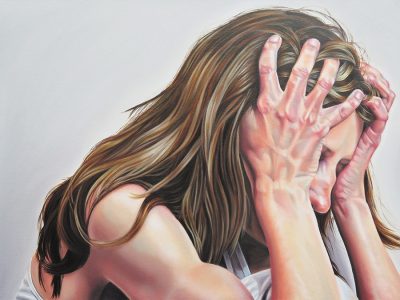
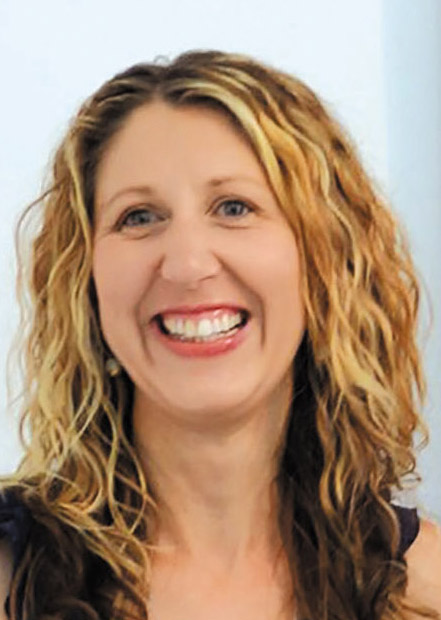 Tracey Coakley’s narrative work explores the human emotions of mental health issues, growing up, pre-teen and understanding the transition from child to teenager and still retaining your own uniqueness. Using herself and her family as models.
“I love making art and exhibiting it. I’ve always been making art, creating and drawing, since I was a child growing up in Melbourne. I used to open-up paper shopping bags and draw murals. I had an amazing art teacher in the last two years of high school who introduced us to the world of art, not only in the classroom but also the occasional field trips from the country to city galleries and the National Gallery of Victoria and art lectures. It was always the subject I enjoyed the most and excelled in.


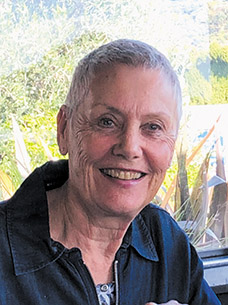
“I have been keen on art all my life. I love making; it is my passion. I believe that there is a spiritual creative force which encourages, inspires and uplifts me. I am happy when people buy my works and take them home to enjoy them in their daily lives. I am happy in my studio when I am in a creative flow… or just thinking and playing with my art. My aim is to develop more skills and confidence in painting and pottery – to be able to express myself more fully.
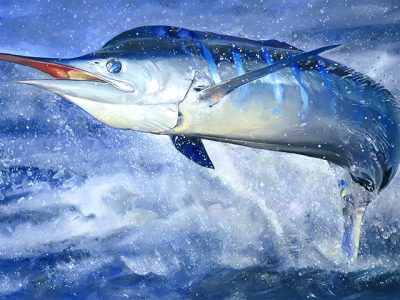
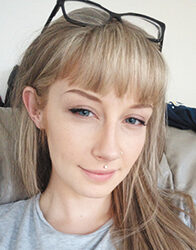
Becoming an artist, for me, has been a personal creative development process from a young age. My biggest motivator was my dad. He encouraged me in the right direction as an artist, together with building a creative and supportive family environment. I started going to fringe art association meetings in England with my Dad when I was still really young, around 12 years old. I did AS level Fine Art straight out of school, and then two years of studying at art college from 2010.
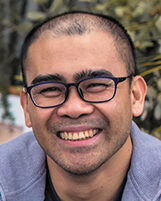
I don’t have any formal art training except for an Art Appreciation Course during my University years in the Philippines. I also joined various informal art classes while working as a teacher – this was when I discovered the art of Coffee Painting. I love using coffee because of its classical and monochromatic effect. I love the challenge of using only one colour to create meaning and evoke feelings. The biggest motivating factor for me is to be able to share my talent and skills in art and inspire others to follow their passion, especially young people. I find my inspiration through life experiences, through people I’ve met in my travels, the places I have been to, and in the beauty of nature.
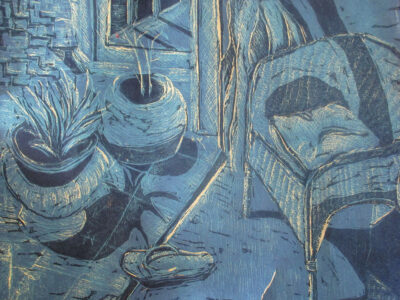
Rochelle creates works with Faber-Castell thick Graphite on Bockingford Drawing paper. Starting with an HB which she uses to sketch the outline, she then moves through from a 2B for shading to a 6B and an 8B for final depth. Rochelle also does some printmaking including etching and woodcuts, which she has successfully sold in a Marlborough exhibition.
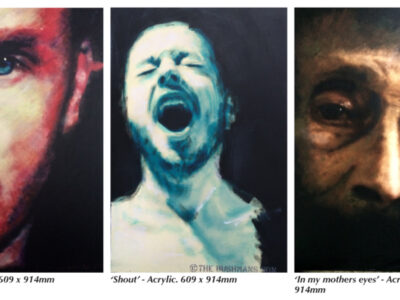

The results of picking up the brush again have been inspiring and well accepted. My passion has evolved beyond what I ever could have imagined. Creating a legacy of work that I can leave behind that speaks my name and my brand, along with the subject and the emotion shown was all inspiring to me. I want people to see what I see, remember what I remember and enjoy it long after I’m not here to paint anymore. Looks, emotions, stories and faces inspire me, and the ability to capture them through a mix of photography and acrylic excites me every time I start or have the idea to start a new piece.
 FIGURATIVELY SPEAKING
I have always been the kid who made ridiculous clothes for their dolls, or vehicles with too many flashing lights for their action figures. When I wasn’t running about outside like a crazed animal with my sister I was hiding away inside a blanket tent talking to myself about some amazing idea for building something. Being an artist I guess is just a certain way of thinking and using your brain. I am a problem solver, I get a kick out of thinking far outside the square and trying to find solutions to the questions that need a creative mind to solve them. Finding what visually or verbally stimulates you to stay sane in a world that bears so much beauty and consequently constant destruction of that beauty.
 I don’t remember a time when I didn’t make art. It has been with me from the beginning. One of my earliest memories of being given an opportunity to paint was on my first day at kindergarten. It was a momentous discovery at the time for me and I didn’t want to do anything else.
Art was always a favourite subject at school, which led me to study art fulltime in Australia. I attended Claremont School of Art in Perth, Western Australia in the early 90s and graduated after three years, majoring in Sculpture. It was a lifetime ago and a valuable experience, fraught with all the learning curves of youth of course, but definitely provided a solid base to build on, and great memories. After Art school in my 20s I meandered through the creative process a bit, mostly in a sleep deprived fog, due to the addition of a husband and children. I always tried to keep my hand in while running a busy household and raising a family and continued to exhibit in Australia and in New Zealand, but it is only now that two out of three of my children are out into the world and doing their own thing, and my husband has miraculously morphed into a fulltime Picture Framer, that I have the opportunity to really work as a fulltime artist.
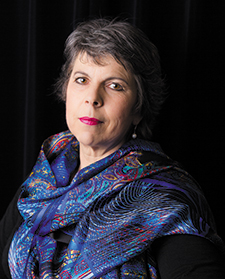
I am largely self-taught but value the grounding and increased confidence attained by completing a diploma in painting in 2011. These days I feel compelled to create positive vibrant images. My brief as an artist is to “Focus on the beauty which is abundant in this world and thereby know peace” (Philippians 4:8-10, from the Holy Bible). One part of my inspiration is what I see as beauty, most often the smallest organic forms in nature - seeds, shells, eggs, petals and leaves, small beginnings from which greater things evolve. Equally important, is how I feel. I paint from the heart and am translating thoughts, words, poems and dreams into painted expression. I have an overwhelming desire to inject colour, truth and beauty into our environment, trying to counter the negative, dark influences pervading society. It’s about spreading a little happiness. Japanese style (the combination of minimalism and fine detail present in paper and silk design) influences my painting as do the swirling curves and clean lines from the Art Nouveau era.
You cannot copy content of this page