
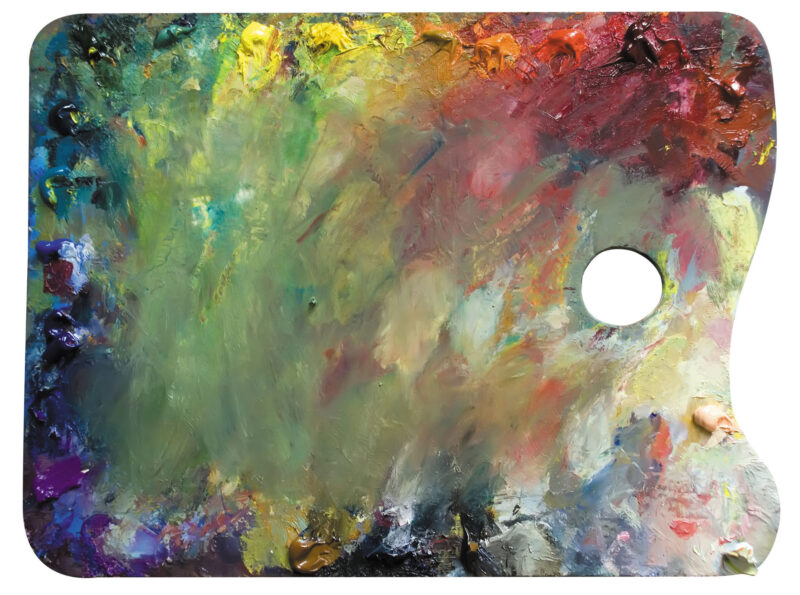
WHAT ARE THE OPTIONS FOR PALETTES?
Traditionally, an artist’s palette was a wooden board with a hole for the thumb, so that the artist could hold it whilst painting. These days, palettes come in a myriad of sizes, shapes and materials… each have their pros and cons, and every artist has an opinion about which one they prefer and why.
DISPOSABLE
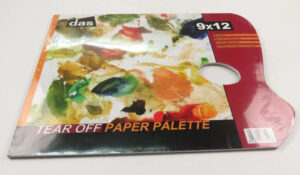
Paper palettes can either be the tear-off type that art shops sell, plain paper or plastic plates available from the supermarket. Some artists prefer the plates as they are easy to hold and inexpensive.
The tear-off versions often have a hole for your thumb and the sides are lightly glued to stop them from curling.
Disposable palette pads are great for taking to art class, outdoor painting, or anywhere else you don’t want to be stuck with a messy palette. The smooth, glossy sheets are easy to mix on, and can be sliced off the top of the pad when finished with. Often it’s a good idea to keep your used palette page- it’s a useful record of your colour mixing that’s bound to come in handy.
PLASTIC
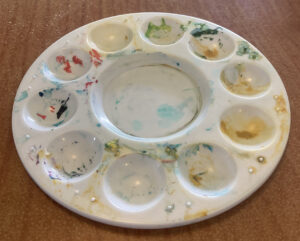
Plastic palettes come in a wide range of shapes and sizes. A handy tip: to stop the paint from sliding around on the glossy surface, is to rub it with sandpaper to create a bit of grain.
Plastic palettes with wells are useful for mixing more fluid colours, such as fluid acrylics and watercolour, as it is difficult to use a palette knife with them. Plastic palettes with lids are particularly good for keeping your acrylic paints wet.
TRADITIONAL WOOD
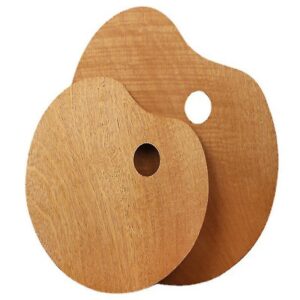
Traditional wooden palettes are made from Mahogany, are kidney shaped and have a hole for your thumb.
Used by oil painters who value the warm colouring that mimics traditional underpainting tones and thus provides an accurate idea of how especialy translucent colours will look on the painting.
You should clean your palette after each painting session. If the surface hasn’t formed a protective patina, you can rub it over with kitchen towel dipped in Linseed oil after cleaning, this will help to protect the wood and build up the paint mixing surface.
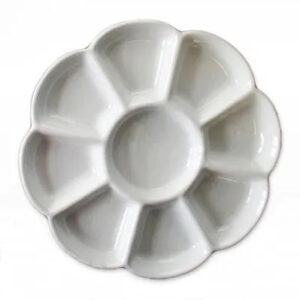
CERAMIC
Ceramic palettes are great for watercolours and inks, which tend to stain plastic. Stack or nest palettes are especially good, as they take up little room and keep paint wet when stacked.
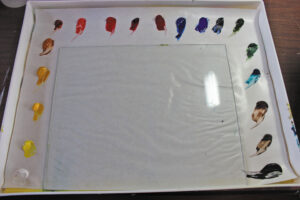
GLASS
Glass is very popular with oil painters because the old paint can easily be scraped off once it has dried.
Most artists place a piece of white paper under the glass to enable them to view their colours more clearly.
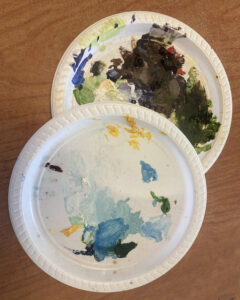
RECYCLED
Recycled and ‘green’ products are becoming very popular in the studio, so it’s not surprising that many artists are using old household containers for storage and palettes.
Used jars, plastic containers or lids and ceramic tiles – in fact just about anything will do, but not for long term use.