

A GUIDE TO EASELS
A decent studio easel is a long term investment, and should offer you stability and flexibility. You don’t have to go for the most expensive wood just because it looks good, remember, it will get paint on it sooner or later, but make sure that it’s not so complicated to adjust, that you end up getting too frustrated to use it.
The size of your canvas, whether you will be painting indoors or out and the space you have available, are important factors when making a purchase.
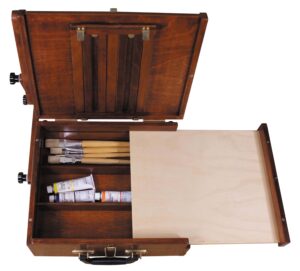
POCHADE BOX
A pochade easel is a small box which has space for paints, brushes and palette. The lid serves as an easel for holding a couple of small painting panels. If you’re going to be painting anywhere windy, look for one with a widget for keeping the lid propped open. These boxes are traditionally used for plein-air painting but can also be used in the studio, home, or classroom. They come in a range of sizes but the best ones are hand-held, to allow you to work on the move.
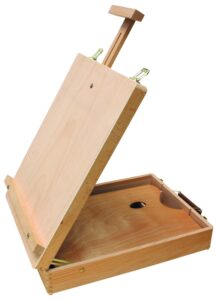
SKETCH BOX
A sketchbox is a larger version of a pochade box. It carries more paints and longer brushes. You’ll need a table or similar surface to put the sketchbox on: if you sit with it on your lap, you could end up working too close to your canvas. They are a great alternative for plein-air painters as they fold up for easy transportation and storage.
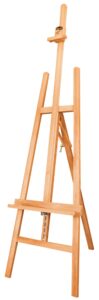
A-FRAME
A-Frame easels are popular because they pack away easily. If space is really squeezed or you need to tidy away at the end of every painting session, an A-frame easel is the way to go. One thing to bear in mind though, is that they are not as stable as an H-Frame and can be easily knocked over.
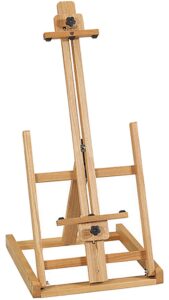
TABLE-TOP
If you paint small paintings and have no space for a floor-standing easel, your best bet is a table-top easel. This easel is intended to be used when you’re sitting at a table rather than standing in front of it. Most table-top easels have an easy adjustment system and can handle small to medium size canvases. They also fold flat for easy storage.
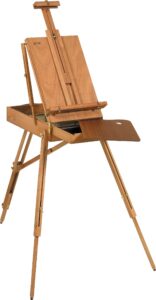
FRENCH
Like a sketchbox with tripod legs so you can paint at a suitable height when you’re standing. Ideal for the plein-air painter but if you’re going to be walking long distances it can get quite heavy, especially if it’s full of paints. Make sure that it unfolds easily.
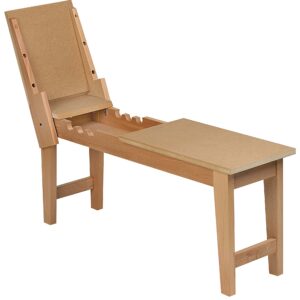
DONKEY EASEL
Popular in art schools, you can sit comfortably on this easel and paint at any angle. It folds in seconds and is ideal for indoors and outdoors. It is easy to transport and easy to wheel around. A strong secure easel with a good sized mast. Some have a mounting system that locks boards in place so they cannot get blown off the easel.
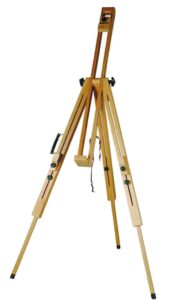
TRIPOD
A lightweight tripod easel can fold up into a small carry bag. These are ideal for plein-air painting or sketching outdoors. Their design, however, means they are prone to being blown over by strong wind, but you can solve that problem by placing large stones around the legs, or digging holes for the legs.
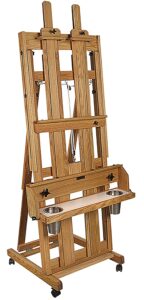
H-FRAME
This easel has a ratchet system for moving the shelf the canvas rests on, up and down. Providing it’s standing on a level surface, an H-frame easel is very sturdy. If a canvas is tightened into the shelf thoroughly, it won’t wobble when you paint. The legs won’t collapse accidentally if you trip against it, as an A-frame easel is prone to do.
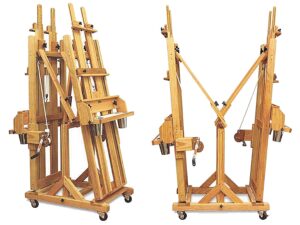
DOUBLE SIDED EASEL
An artist can work sitting or standing, with a variety of easily adjustable settings and angles. It is excellent for large work and great for the multi-tasking artist who works on more than one project at a time. A double-sided easel may also help when students share classroom or studio space. [/pms-restrict]