Rob Foote
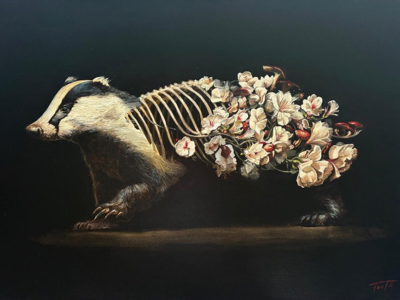
Above: Burrow Bloom "No one can see how long an artwork took to paint - so I take my time." I’ve…

Drawing is a visual art that uses an instrument to mark paper or another two-dimensional surface.
Above: Burrow Bloom "No one can see how long an artwork took to paint - so I take my time." I’ve…

IN FOR THE RIDE A self taught artist, as her mother was, Sheelagh McHaffie has embraced her self discovery to art…


It’s hard for Wake to pinpoint how he ended up being an artist. “Anyone who does anything slightly creative is an artist to me, but to define it to something more specific, I started to take it seriously when a friend of mine made a social media page for me around the end of 2020, to exhibit and possibly sell some pieces. A couple of years ago, I would never have dreamed of people wanting to pay actual money for the things I draw. However, I sold a piece to a guy all the way in the USA which I’m pretty proud of, it’s very humbling.”


WINDOWS TO THE SOUL Gaining her Bachelor of Fine Art at Whanganui Quay School of the Arts (now Whanganui UCOL) between…

 THE MAGIC WEAVER
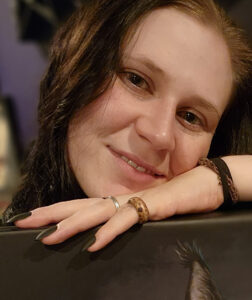
I haven’t had any formal art training. My education was based in Graphic Design since I was predominantly a digital artist until two years ago. When I was pursuing education, graphic design was all that was offered for digital artists but it turns out it was not what I wanted! I wanted to illustrate, to draw, to create. So the internet and books were the things that educated me. If I wanted to know how to do something, I looked it up.

ARTISTIC ESCAPE Diagnosed in 2018 with Fibromyalgia and FND (Functional neurological disorder) Monique Tichborne bravely started to use art as a…


“I can draw recognisable people with just a few lines without any real trouble,” he reveals. “I’ve been doing political cartoons. They’re an expression of my annoyance. Cartoons are caricatures really. Say I’m doing a cartoon of British Prime Minister Boris Johnson… I can do the shape and the way he stands without too much effort. I look at a couple of other people’s cartoons of him and see that they all have little piggy eyes and droopy eyelids. For me the thing that makes Boris look like Boris is the hair, the round face, the fat body and the shabby suit. It doesn’t really need any additional features. That cartoon could be Donald trump or Boris Johnson. In order to produce political cartoons you have to stay abreast of the news but in order to stay sane you have to not stay abreast of the news! It’s a difficult tight rope to walk. I have always recognised people by their shape, the way they move, the way they walk, rather than by their faces. If I’m painting someone then those are the characteristics that are most important to me.”

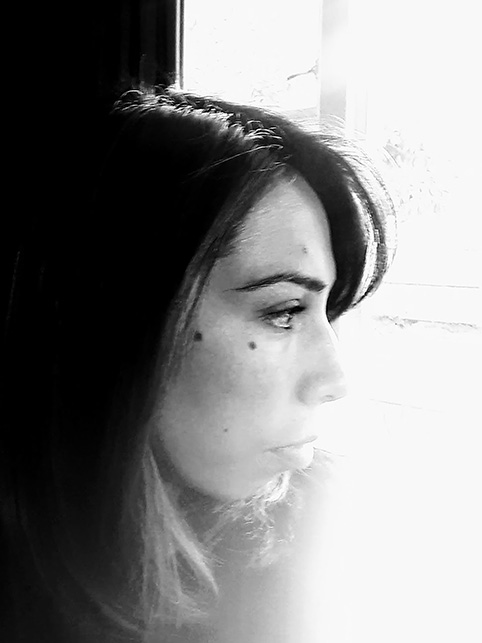
Estefania is currently studying for a Bachelors degree in Architectural Studies at ARA Canterbury. She has learned that all ways of creating achieve the same point, which is to create, whatever name you call it. Inspired by life itself, the things she sees that make her think or suprise her; she finds that in Chile the focus was on people, the human figure and a totally different landscape to New Zealand. Here she is inspired by the remarkable beauty of New Zealand’s terrain. “I normally go out and take photos, for example, the Heaphy Track on the West Coast, which was the first awakening for me to this beautiful country. I started to draw and paint what I saw. I think walking is a big inspiration for me, giving me an understanding of my feelings and perception of what I see.”

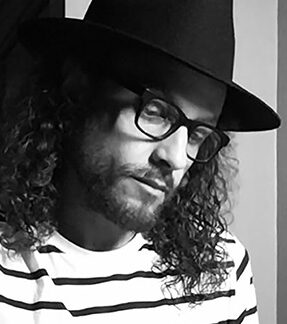
“A few years ago, I did a realistic charcoal drawing which caught the attention of leading motivational speaker Craig Harper, who is also a writer and educator in the areas of health, high performance and personal development. He shared my work with his online audience and I soon had a few commission enquiries coming in for charcoal portraits. Although my preferred style has always been a very loose and expressive one rather than realism, I decided to make the most of that momentum. I launched my website and social media pages soon after and I’m lucky enough to have been a full-time artist since.”


By Tim Saunders
“Growing on top of the henge (earthen bank), their intertwined roots have been exposed by soil erosion, caused by a combination of weathering and visitors feet. The resultant lattice is fascinatingly ornate and well beyond the scope of my knife work. Brushes didn’t seem to hold the answer either; the magic that I was reaching for didn’t seem to be present in a realistic depiction. I tried several approaches, including a diversion into a stylised use of colour that took on a life of its own for a while but it wasn’t until I reached back in time for my pen and its promise of crisply rendered detail, that I realised that colour itself might be the problem. It seems to be well known among photographers that a sharp monochrome photograph will show detail better than any colour photograph could. The reason for this has nothing to do with any inherent superiority of black and white film over colour; it holds true in digital photography. It is simply that colour distracts the eye from detail and it seems that our brains can only cope with so much visual information at a time.
You cannot copy content of this page