Skip to content
Gordon Cronshaw

Gordon Cronshaw

As a young child I would be mesmerised by my Grand Father (Val Blomfield) oil painting on the veranda in Pt Chev. I remember sitting with him at Western Springs for hours on end watching him sketch the ducks, trees and water. I always had a fascination with his skill.
Pop would always draw a cartoon on Birthday cards, Christmas cards, envelopes which he would send out to family and friends and this is where my interest in cartooning started. I remember growing up at my fathers signwriting shop (Colin Blomfield - Blomfield Signs) and I would spend as much time as I could watching my Father and Grand Father signwriting and in essence creating unique pieces of art with every skillful brushstroke. True artisan craftsmen experts in their own right. Some people laugh, some people at events ask me to add their dear old deceased dog – it is so much fun that I forget that this is now a job for me. The best job in the world really. To date the highlights have been illustrating new Sunglass range at a Dulce & Gabanna event, cartooning for a Sky City Breakers event, cartooning for Hospice West Auckland and helping such a great organisation and now, cartooning the awesome publishing crew for the cover of The New Zealand Artist Magazine. Commissioned pieces for Australia and South Africa were also great highlights as well as private functions and weddings around New Zealand and the many commissioned pieces I have done for people from all walks of life. I am humbled to be blessed with this skill and have no idea where this will go but it always comes back to creating in an artisan way. Something that can be so easily lost in this technological age.


register and subscribe

Subscribe Today

Bonnie Coad

Bonnie Coad

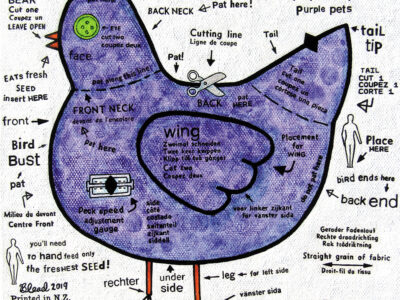
“I think I have artistic genes.” The family line of collage artist Bonnie Coad can take a little credit as it seemingly churned out many artistic and musical family members before her. Growing up isolated without electricity on the West Coast probably also played quite a major part too.
With electricity being a creature comfort for most growing up, Bonnie decided to find creative ways to keep herself occupied. “If I didn’t have my head buried in a book I’d draw for hours, make up music on my mother’s old piano or create model worlds with plasticine. “My art teachers at high school told me I was good and I needed to apply myself, but high school was all about socialising for me. “My family wasn’t well off, so going to art school didn’t seem like a reality to me but in my early twenties, on a whim, I brought some paints and started painting. Once I had started I couldn’t stop. I became a bit obsessed with it all and would take out great stacks of art books from the library and lose myself in them. “I took some night classes at my local high school and started visiting galleries and art shows. Participating in my first exhibition clinched the deal for me and there was just no turning back – I just couldn’t stop making art!” It comes as no surprise that with the ability to create from a young age and having to entertain herself, Bonnie found herself immersed in layer upon layer of texture-based artwork – with mixed media collage being her medium of choice, with animal’s often featuring.”
See more about Bonnie here.

register and subscribe

Subscribe Today

Toby Willsmer

Toby Willsmer

We often read about acrylics, brushes, and easels, conjuring up images of paint splattered fingers, charcoal pencils strewn about a studio or a well-worn easel. We also read about products admired, like a certain acrylic that works great for adding depth. Enter graphic illustrator, Toby Willsmer, whose favorite equipment isn’t at all messy…

“I use a Wacom Intuos Pro graphics tablet. The pen set up of the Wacom is good for doing light/heavy strokes, varying in size and colour density as you push harder, just like a brush. Wacom has a lot of support in different digital environments so it is easy to set up and get drawing.” Toby’s background is not what you would expect. Forget the ‘IT department’ stereotype, or the graphic design student – it is a drawing tablet after all – and you’ll find traditional art and a few pieces created by spray cans here and there as well as digital. “I’ve been able to draw from a young age. I did an art course in the UK in 1989 but I’m pretty much self-taught from studying other artists and a lot of trial and error. I was always drawing and painting as a hobby and it was something I really enjoyed. “Spray paint was the first medium I got the hang of using, dabbling in graffiti in the 80s and using it on canvases later on. It’s expressive and unforgiving and I like that, as it gives an edge to whatever you paint with it. “Over time it all grew into something that people started to recognise and request.” The motivation behind his creative process is one of drive and determination. Family prove to be a big driver and an inspiration. This helps Toby to kick-start his artwork from its inception, through to the final product.

See more about Toby here: Toby Willsmer.

register and subscribe

Subscribe Today

Michelle Wright

Michelle Wright

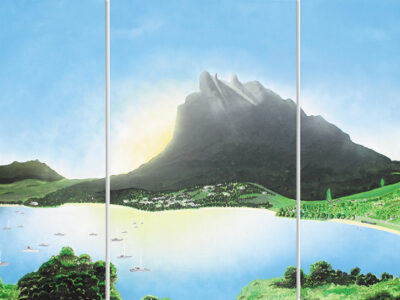
If you’re ever exploring the beauty of Northland and you hear opera music blaring across the countryside, you will have stumbled on artist Michelle Wright at work. Acrylics at the ready, the strains of each melody wind their way around her easel and aid in creating her next piece.

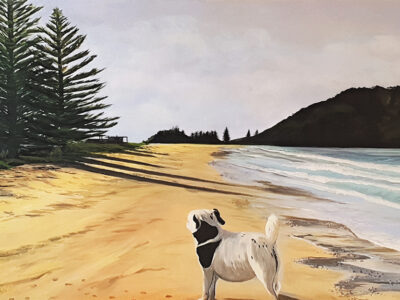
“There is nothing more I love than blasting my favourite opera songs from ‘Il Volo’ to my absolute favourite ‘Andrea Bocelli’, much to the enjoyment of my neighbours!” In short, it works. Michelle spends a lot of time outdoors and a lot of this inspires her work. Although it wasn’t always the case. As with many, painting proved to be a healer in many ways. “I have always been inspired by New Zealand scenery, the native bush, native birds and coastline. Growing up in Otaki and Kapiti Coast was always inspirational, even on a wet day! “Let’s just say like many others, my path in life has not always been smooth sailing. From health scares to, let’s be honest, some rock bottom moments. It’s been a struggle. With support from family around me I’ve managed to pull myself through with my art as a great distraction. “Now each day I enjoy multiple walks along the beach where I live, talking to and photographing the local bird life. My preferred subject would be the New Zealand coast and landscapes. I am drawn to the different times of day, the different light, the clouds, the reflections, dawn and dusk.” She also enjoys painting from photographs and has a myriad of them for this very purpose. “I usually always have my idea of what I would like to paint; I always refer to my huge library of photos that I have taken myself over the years, as well as ones sent from family and friends.”

If you would like to get in touch with Michelle, please email her here: Michelle Wright

register and subscribe

Subscribe Today

Marina de Wit

Marina de Wit

By dictionary definition, fulfillment is described as ‘the act or state of fulfilling: to witness the fulfillment of a dream; to achieve one’s hopes.’ For Marina de Wit, this is found through the lens of a camera. This however wasn’t always the case.

“I knew I had something to share, that I was meant to do something with my life that had meaning and that could potentially impact others in a positive way. I was at a pretty low point in my life. Photography and the creative aspect thereof changed my life and continues to do that everyday. “I discovered that I loved being outside taking snapshots with my phone; this led to me purchasing my first DSLR camera in 2015.” Knowing your way around the complexities of a camera is one thing, but to get what you see through the lens to come to life in post-production is another thing altogether. To see an image is just the beginning, to see what it could become, that you can turn it into something special by the end of the process, is a gift not many have. Marina however, has a knack of doing this. “I am not a technical photographer at all but mostly shoot from my heart and current mood.” This is something she encourages for any up and coming photographers. “Take it slow and breathe, it’s ok to be vulnerable, to be scared. Do it anyway. I firmly believe that life starts at the other side of fear.” As far as content for her photography goes, Marina is focusing on floral work, with the clear heart-felt shooting paying dividends. Natural light and colour are the things she aims for most.

See Marina's work here: Marina de Wit

register and subscribe

Subscribe Today

Ingrid Mann

Ingrid Mann

It is often said it’s not about the destination, but the journey itself. For many, this describes art; whether it is a finding of oneself, growing as an individual or simply starting a piece, shaping and moulding it as you go until that final moment of being happy with the end result. Ingrid Mann shares this philosophy of the journey.

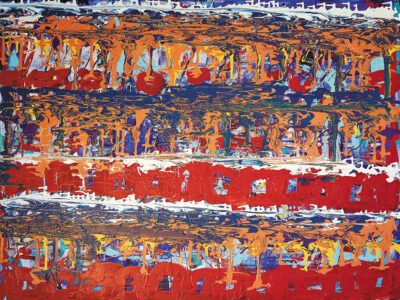
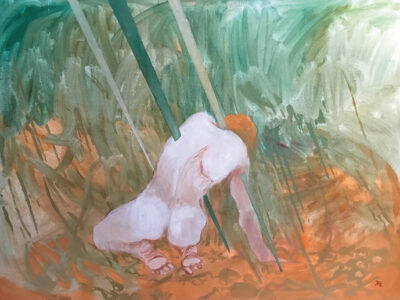
“I define my art as a fabulous journey. My art practice is not just the practical side, making art, but it also encompasses all my visual interpretation of landscape and my cultural experiences. These elements are abundant in New Zealand and returning here after 40 years has greatly stimulated me. My art is intuitive, and as such I am driven to use my imagination and feel a free creative mind. I love to be loose with paint, however I also require myself to have some discipline – especially with black and white or small paintings.” Regardless of the approach, the fabulous result of each and every stage culminates in some special pieces of art. Colour abounds and Ingrid seems to demand a presence with the splashes of each hue across the canvas. “Art takes you to another plane. I am constantly inspired by colours, visualising and working on the process. My work is deliberately non-representational and abstract, because I want to engage the viewer’s imagination so that every time they look at my work, they see something different. Art is very subjective. Having said that, my proudest moments are when I have completed my painting and I have time to sit and look at it. I never fail to be proud of my own work and I do not need or seek other opinions.”

See Ingrid's work here: Ingrid Mann.

register and subscribe

Subscribe Today

Escha van den Bogerd

Escha van den Bogerd

There’s something about painting. The caress of the brush against the canvas, turning a blank space into a vibrant masterpiece.

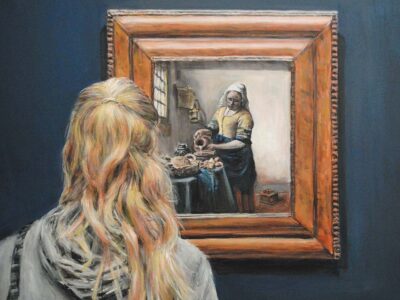
There’s something about looking at paintings too. Imagining the artists thought process along the way, how they used colour, blending and shapes. How did they get inspired to do this piece of work in particular? Wellington-based artist Escha van den Bogerd travelled the long way from the Netherlands to our fair shores in Aotearoa, to paint portraits, in some cases of people looking at paintings: the inspiration for each piece of work being a simple enough philosophy. “My main inspiration is from the Old Masters and the classical European feel. I started off as a portrait artist and then did figurative painting for many years. I have been working for some years on my museum paintings, a series of paintings of people studying famous paintings,”she says. The inspiration of the classics is a key driver for Escha as you can imagine, along with the ability to share this with all around her, and the freedom she has to do just that. “To be able to do what I love and share this with the world, to express my feelings and moods and to be able to work for myself and have the time to work when I want is a great combination.” Mood definitely helps too – it’s not always easy to paint a nice happy picture if your mood doesn’t match. Getting into the right headspace is important, but changing moods can bring out new and interesting works and ideas, in addition to other elements that Escha draws on for inspiration.
See more of Escha's work here: Escha van den Bogerd

register and subscribe

Subscribe Today

Alina Gane-Hurcomb

Alina Gane-Hurcomb

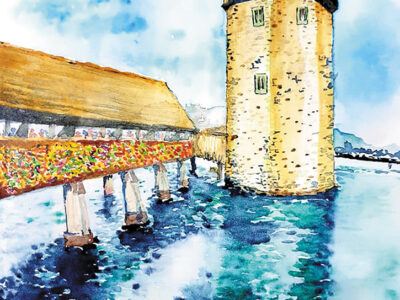
Searching for treasure or a lofty goal has been a human motivation since day one. Whether it be the elusive Holy Grail, pirates looking for the sunken chest of bullion or getting the detail in that brushstroke to look just right, it seems we’re all searching for betterment. Somewhere along the line we have to make a decision on a definitive direction. Do I focus on art full-time? Or is it a part-time gig or hobby? Enter Alina Gane-Hurcomb. It seemed to dawn on her that once she got started, she fell into a love of painting and all things art! “I had always loved art, but hadn’t considered it as a career until I attended a free workshop at The Learning Connexion three years ago. They called a week later offering me a scholarship to come and study with them.

“The scholarship motivated me to try my hand at art and after two weeks, art had crept into my soul and made its bed. I knew I was there for the long haul and that art was what had been the missing ingredient in my life.” The decision made, direction was the key. Alina had to find the treasure now that the missing ingredient - painting - was evident. “I didn’t know what I was inspired by creatively. I would see fellow artists who were completely passionate about various things and I would work with them on projects and exhibitions in the hope that their passion for the subject matter would rub off, but I found that my work always lacked something. I knew that I needed to find my own muse, but had no idea where to look. In 2018 I found her! It turns out that my passion, inspiration and soul reside in historical European architecture and travel.” She came full circle in considering herself an artist following one of these offshore adventures.
Alina Gane-Hurcomb

register and subscribe

Subscribe Today

Dougie Chowns

Dougie Chowns

Art, creative thinking and graphics have been my life since age fifteen when I was given a bursary to Art School in 1952 – it changed my life, my thinking, my skills and especially my eye-hand coordination. Art has since never been an amusement pastime or hobby for me. It has been my living – my life. A social realist painter and thinker – Douglas remains true to his heritage.

‘Our Village’ Attenborough’s fields, Haydon Dell, the Churchyard graves of Dr Munro, Thomas Hearne and Henry Edridge ARA and the remains of Herkomer’s castle ‘Lululaund’ were the wartime playgrounds of Douglas Chowns. Studios still existed in friends’ gardens or were abandoned, dilapidated shells open to the sky. Lucie Kemp-Welch was painting in a black straw hat and smelt of turpentine and lavender water. The late Mary Bromet and her work were still much in conversation. The Bohemians – the Artists – had created the aura and myth into which Douglas was born in Bushey in 1937. A. E. Matthews was a familiar figure about the village as were Canadians Frank and Cyril Church who later talked film and Bushey Studios when Douglas was in his teens at Art School in Watford. From an early age, Douglas was fascinated by illustrations in his mother’s Orange Fairy Book edited by Andrew Lang and illustrated by Henry Justice Ford, from whom he learned to understand drawing in line. Douglas is also an accomplished watercolourist, painting land and seascapes that often facilitate his lifestyfe. He was the University of Otago commissioned painter and was Patron to the Northland Polytechnic Art Gallery at Geoff Wilsons request before Geoff tragically died. Douglas was Senior Art Tutor and initiator of the Art School which now lists over 150 full time students. As co-founder of the New Zealand Gaidhealtachd annual Celtic Summer School, his childhood legacy in the shadow of the Royal Caledonian Schools, piping, dancing and drumming with Pipe Major Charles Turnbull around and about Bushey and Watford, the West Herts Scottish Society and the London Scottish Regiment, the Thistle Club dances in Oxhey church halls, have all surfaced in McKenzie Bay, a New Zealand centre where Scots, Irish, Welsh and Cornish meet on a regular annual festival. Touring New Zealand Universities and Polytechnics with London Art Historian and author Edward Lucie-Smith, an old friend and colleague, resulted in a new body of work comprising this ‘Enduring of Suffering’ series.
Dougie Chowns

register and subscribe

Subscribe Today

Marion Brennan

Marion Brennan

Beauty is at the centre of much of our inspiration. It can come from many places; a beautiful garden, animals from distant lands and even from other artists’ work. South African-born Marion Brennan can lay claim to all of these, with a mixed bag of wonderful sights capturing the essence of her work. “I love gardening and am lucky enough to have a large garden where I grow everything from our veggies to beautiful orchids. To see the amazing colours in flowers with the early morning light on them, or a gorgeous fantail flitting around me while watering is enough to talk to my soul. I am also very passionate about the African animals which in the main are under threat. I have spent a lot of time in game reserves in Africa and the wild animals inspire me to try to capture their unique beauty.”
African animals in particular shine through in many works from Marion; the influence also evident in the creative process, as she often has traditional African music playing in the background as she creates. In most cases, these creations are ‘scratch painting’. Marion follows a simple and effective 10-step process once a subject is decided upon. “Step 1: Take photos of the subject. Step 2: Draw the subject on tracing paper once my composition is decided upon. Step 3: Transfer the drawing onto the scratchboard by applying pastel to the reverse side and tracing over it with a pencil. Step 4: Using various tools scratch through the black layer of the board to expose the white clay beneath. Steps 5 - 9: Apply various coloured inks and re-scratch to get the right depth of colour, light and shadow. Step 10: Apply fixative.” With scratchboards to the fore, it’s clear certain products take centre stage and in some cases are of a special or particular quality. “I use Ampersand scratchboards, Koh- I-Noor or Winsor & Newton inks, craft knives, and Micro Mark fibre glass pens. Ampersand boards are gallery quality and one has to choose inks carefully as an ink that dries with a hard skin finish is not suitable to scratch through. I have to import some of my materials from the USA.” This attention to detail shines through in her alluring and striking work, the animals in particular ‘coming alive’ off the scratchboards.
Marion Brennan

register and subscribe

Subscribe Today

Back To Top
Search

You cannot copy content of this page