Tammie Riddle

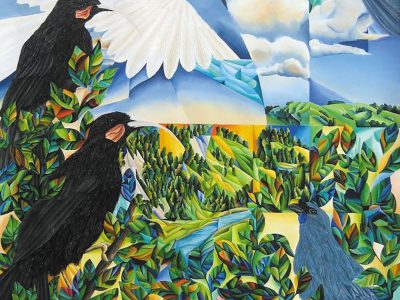
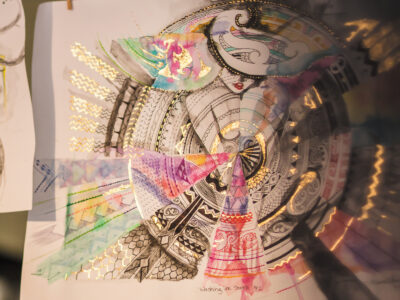
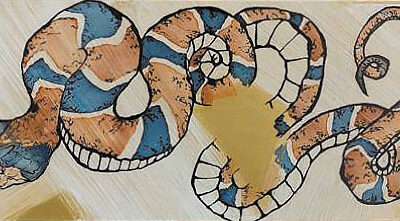
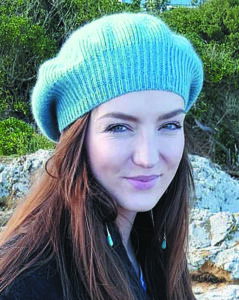
Artists don’t have to work full time in their studio to be an ‘artist’. Tammie says she believes she has artist etched into her bones, as if she is working on the weekend or too busy during the week to get into the studio, she is like a bear with a sore head, and we know what they do. When the question, ‘What are your hobbies in your spare time’ came up Tammie really struggled to answer this, she says it took her a very long time to come up with a response, as her only true hobby is being in the studio, art is her life. Tammie was home schooled from the age of three, it was not until her parents suggested in 2009 that she should enrol in classes held by the Feilding District Art Society, a class that had eight other students, her being the youngest. This is where Rita Easther introduced her to the influences of Braque and the style of Cubism. Rita was a well-known artist for her renditions of Rangitikei cliffs and landscapes and dislocated birds using cubism. She took Tammie under her wing and passed on a wealth of knowledge and continued to work closely with Tammie after the classes had finished. She encouraged her to join the New Zealand Academy of Fine Arts, as the next step to be taken and to make sure that she continued to regularly submit work. Rita was Tammie’s main inspiration and she relates how she loves how her work stands out from across the room in galleries. This creates a bit of uncertainty in her as sometimes she worries her work is too different, but Tammie has learned different is good, her work is distinctive. See Tammie's work HERE.





 THE FASCINATION LIES IN THE DETAIL

 INSPIRED ILLUSTRATION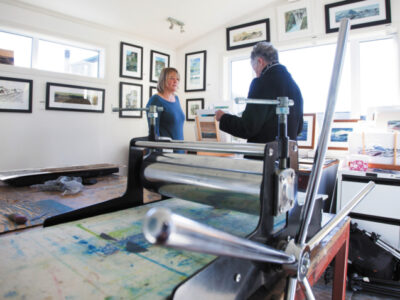
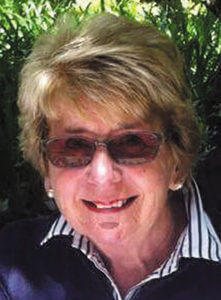
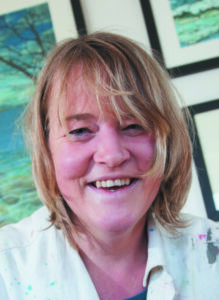 Sally-Ann Davies was born in Shropshire, England and resides in Taupo. She started her journey of becoming an artist as a toddler, drawing on the newly wallpapered walls of the farmhouse she grew up in. Her favourite subject at school without doubt was art. She vividly remembers that the primary school she attended would reward you if you finished your work early, with going and playing in the craft corner. She remembers how amazing creations developed with the simple materials such as egg cartons and toilet rolls.