Presentation Wins the Day
Had a rejection slip recently? According to the popular US-based online gallery, Light Space & Time Online Art Gallery, if artists…

Had a rejection slip recently? According to the popular US-based online gallery, Light Space & Time Online Art Gallery, if artists…
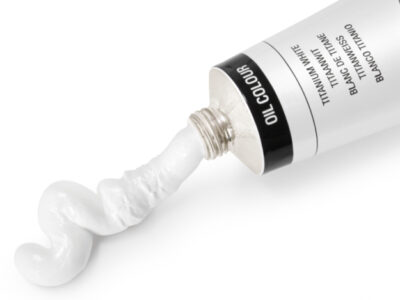
WHICH WHITE IS WHICH Some would say that the most important colour choice artists make is the white they choose to…
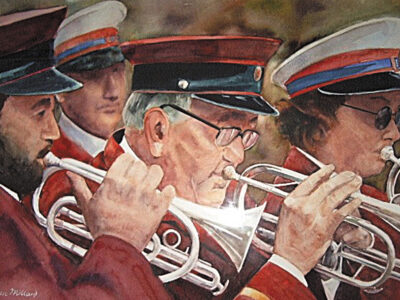
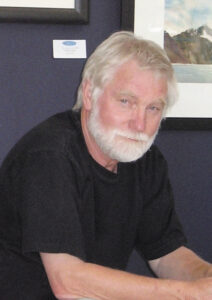
He has been a graphic designer, an illustrator, a cartoonist, an advertising art director, a copywriter, a writer for television and radio, a TV producer, a journalist and the editor in chief of two magazines - one a sports magazine in the States. For a decade he and his partner Marilyn Palmer, also a respected watercolourist, ran their own gallery near Queenstown. They now live and paint in Auckland.

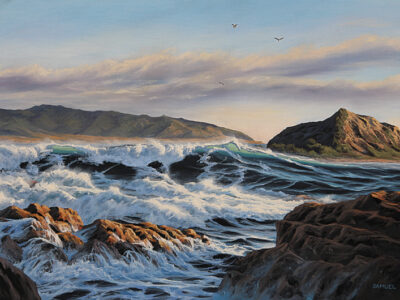

Born in Guernsey, Samuel’s first job was in London. Not enjoying either London or earning much money, he took up painting again for something to do. He visited a gallery in Exeter and saw the amazing seascape by Cornish artist, Peter Cosslett.
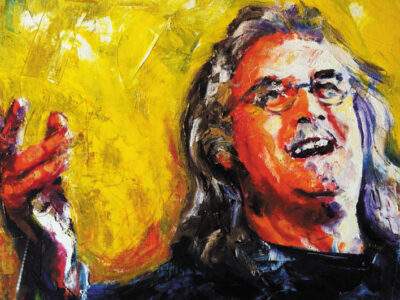
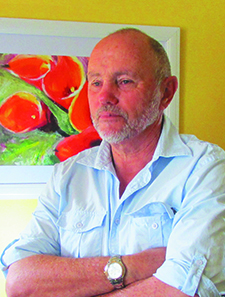
Colin likes to work from photographs, saying he does not really like doing pictures of people posing or pulling a big smile. “I like it when they are relaxed and acting naturally. I think that it is a privilege to paint a portrait of someone and try to be honest,” he says. “I draw using a light pencil and then paint with a brush. I prefer painting in oil because the paint takes longer to dry than acrylic paint; this means that I don’t have to keep remixing my paint in order to make the same colour.
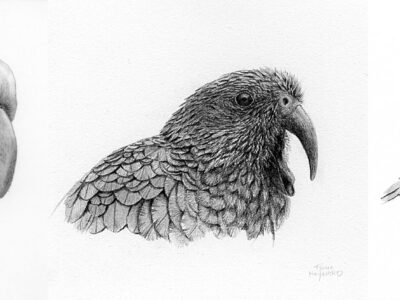
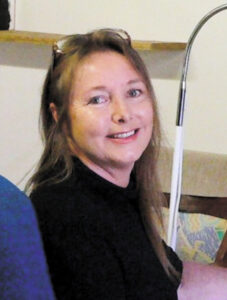
Whilst a deep and profound love of nature lies at the core of her inspiration, it is a peaceful inner feeling of freedom and joy in creating a new artwork that drives and motivates Fiona to paint and draw. Although she has had no formal art training, Auckland born Fiona says her capacity to draw and paint stems from her mother, a talented artist in her own right, who encouraged Fiona from a young age to pursue her artistic bent.

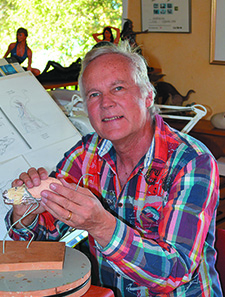
While Geoffrey recalls making plasticine models when he was 11 years old. Things became a little more serious, while he was studying for a degree in zoology, when he was asked to make models for a prehistoric reptile display at the Auckland Museum. After this he was asked to illustrate ‘Collins Guide to the Sea Fishes of New Zealand,’ which was how Geoffrey’s career as a professional artist really started.

GOING GICLÉE Giclée (pronounced zeeclay) art prints produced by artists in New Zealand are becoming increasingly popular and more widely available…
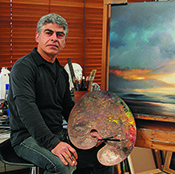
In 1990 Mehrdad left Iran for New Zealand, which resulted in a pause in art while he improved his English and learnt about our culture. Family reasons dictated a move to Sweden, and a new culture and language to learn. 1999 saw Mehrdad return to New Zealand and settle in Christchurch.
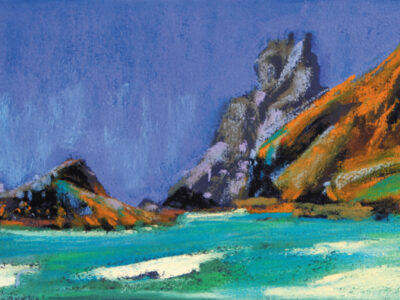
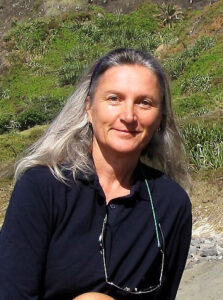
“My life is about energy, rhythm and sensation, and translating that into a piece of art,” she declares. “It is about inventing the perfect technique, my own unique language for my response to nature. It is the experience of what I see happening all around me that stimulates me and gets me going, not the thing itself, that is the underlying subject of my work.”
You cannot copy content of this page