
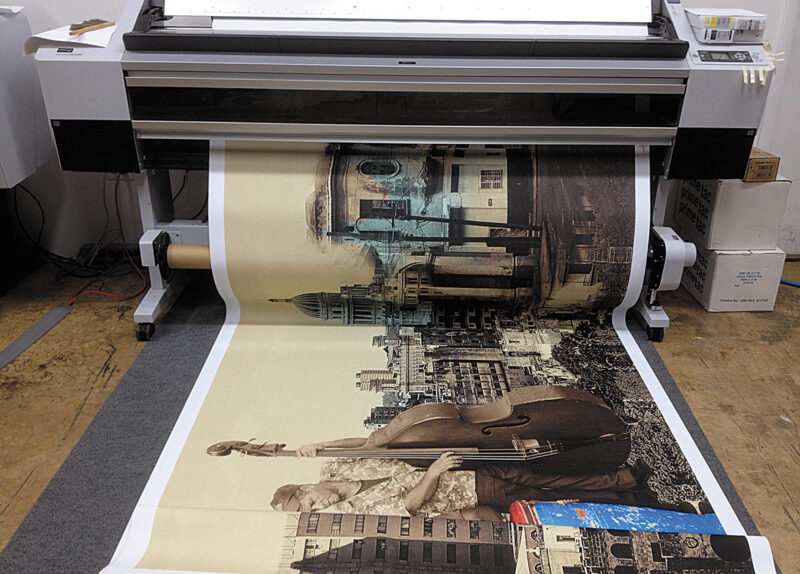
GOING GICLÉE
Giclée (pronounced zeeclay) art prints produced by artists in New Zealand are becoming increasingly popular and more widely available. Coupled to this, the printing of fine art prints in this country has changed dramatically over the last decade with digital print companies gearing up to meet the demands of an increasingly sophisticated market and the call for higher quality prints.
Giclée art prints are produced by sophisticated digital printers that deliver a fine stream of long-life ink onto archival paper such as 100% cotton rag paper or high quality canvas. The resulting print has extremely fine colour fidelity and exceptional detail that is suitable for museum and gallery display.
While assisting artists to sell their work at a decent price it also provides both the greatest long-term value for customers buying for home or office decoration and the best opportunities for early collectors of the work of contemporary New Zealand. It is important for the artist to have a clear understanding of how the process works, and the importance of each of the steps involved. If any of these stages are compromised, it is likely to affect the end result.
The steps from the artists’ perspective are really simple:
• The original artwork or a digital file captured from it
• Instructions as to the physical print size(s)
• Medium desired
• The number of prints desired
The image
Obtaining a high-resolution digital file, which will be used for printing, can be done by scanning the work directly or photographing the work with a high quality digital camera. The size and resolution of the image determines the size of print. The higher the resolution the better quality and ultimate size of the print. As a rule of thumb the digital image needs to be the same size as the final print at a resolution of 300 dpi (dots per inch). An image that is going to be printed to say 20cm x 30cm will require a file size of around 24 megabytes.
It is crucial the colours of the painting are accurately recorded so they can be produced correctly. This can be done with a colour reference chart included with the photograph. If you doubt your ability to take a decent photograph or reproduce colour accurately get a professional to do the job. It’s always worth it.
What medium?
The choice of substrates (e.g. paper, canvas, stock) is enormous and in-depth knowledge and experience of the media is a key part of a printer’s expertise. It is important to use an archival paper that will extend the life of the print. Giclée print manufacturers should advise the artist exactly what materials they use. If they’re not prepared to do so, some caution should be exercised. Some cheap papers will look great initially but break-down or yellow over time. Alternatively, there are independent manufacturers and suppliers who make paper specifically for giclée printing; one of the better ones is Hahnemühle
Beware of cheap canvas. There are some poor quality canvases being used out there, they don’t last the distance. Look to see if the edges are cracking and ask if the print has been sealed. Moisture will affect the inks over time which is why reputable framers use a special sealant to protect canvas prints. It is important to look at the quality of canvas stretching. Look at the tightness of the canvas. If it is baggy don’t buy it, it will only get worse. If there are lumps of folded canvas at the corners or the stapling is messy then this also indicates poor quality workmanship.
Inks
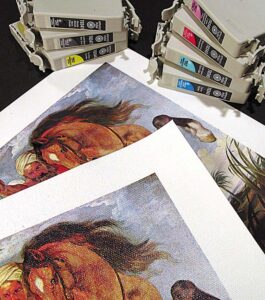
Non-original or fully dye-based ink sets can appear really bright and saturated, but within weeks or months do not look the same at all. Unlike pigment, dyes dissolve when mixed into a liquid. Dyes are well suited for textiles where the liquid dye penetrates and chemically bonds to the fibre. Dyes, however, are not suitable for the relatively thin layers of ink laid out on the surface of a print. Professional giclée printers use pigment-based inks which offer better covering power and enhanced permanence. Pigment is a finely ground, particulate substance which, when mixed or ground into a liquid to make ink or paint, does not dissolve, but remains dispersed or suspended in the liquid.
How many prints?
Only you can decide how many prints you want. Some artists produce a limited number of signed and numbered prints. This enhances the value but limits the number of sales. Galleries and customers often prefer limited editions for these very reasons.
Framing
Most prints are sold ready mounted. It is important to use conservation framing materials from both a quality and longevity point of view.
The content of this article was reproduced with the kind permission of Anthony Ellis of NZ Fine Prints. The full article can be seen here.