
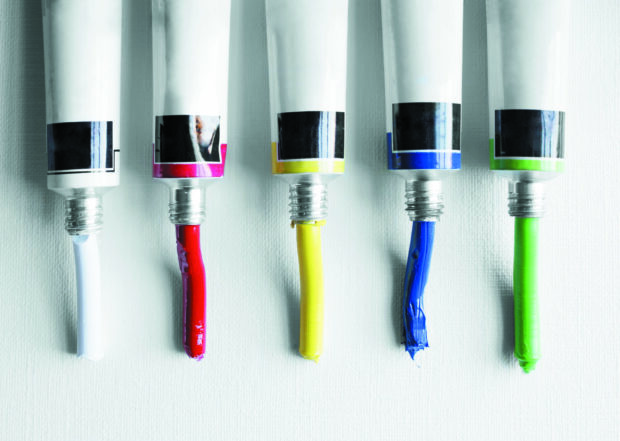
Acrylic paints were made commercially available in the 1950’s but they only became popular in the 1960’s when artists such as Andy Warhol, Helen Frankenthaler and David Hockney were among the first to take advantage of the flexibility offered by these paints.
 Artists found that with acrylics different textures and consistencies could be achieved, colours could be transparent or opaque, and they could work much more quickly due to the faster drying time. Essentially acrylics opened up a whole new world of creativity.
Differences between acrylic and oil paint
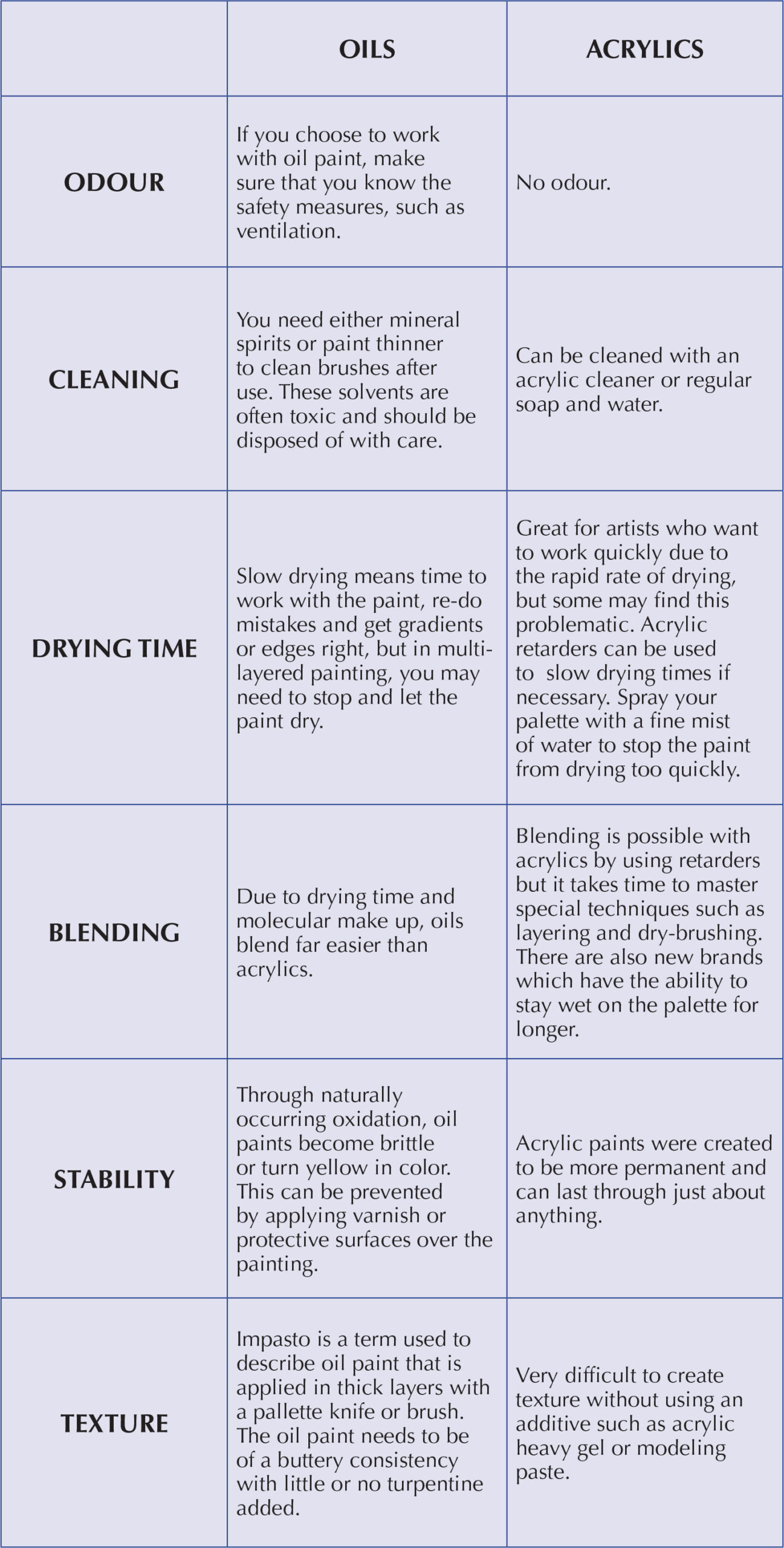
The main difference between acrylics and oil paints is the drying time. The slow drying time of oils allows for more time to blend colours and slowly apply glazes over underpaintings. This can be an advantage for certain techniques, but it can prevent the artist from working quickly.
The fast evaporation of water from acrylic paint can be slowed with the use of an acrylic retarder which usually contains glycol or glycerin-based additives. However, too much retarder can prevent the acrylic paint from ever drying properly.
Cleaning up
Acrylics can be cleaned with soap and water, while mineral spirits or turpentine are used to thin oil paint and clean brushes. These contain some level of toxicity and all solvents can cause dehydration of the skin and dermatitis from prolonged or repeated exposure. Turpentine can also cause skin allergies and be absorbed through the skin.
Flexibility
Due to acrylic’s more flexible nature and more consistent drying time between colours, the artist does not have to follow the “fat over lean” rule of oil painting. Acrylic can also be safely applied to raw canvas without the need to size or prime.
Oil paint films can become increasingly yellow and brittle with time and lose much of their flexibility in a few decades. Additionally, the rules of “fat over lean” must be used to ensure the paint films are durable.
Range
Not all pigments in oil are available in acrylic. Prussian blue has been recently added to the acrylic colours. Acrylic paints, unlike oil, may also be fluorescent.
Permanency
Although the permanency of acrylics is sometimes debated they appear more stable than oil paints. Acrylic paint is very elastic and thus prevents cracking. The binder is acrylic polymer emulsion and the paint remains flexible as this binder dries.
Oil paints fade in colour and develop a yellow tint over time; they also begin to crack with age. Acrylic paints have only been in use for approximately fifty years and have yet to alter in ways seen in oil paints. The changes observed in works done in oil are caused by the linseed oil which dries to an inelastic film, and cracks as temperatures vary.
Versatility
Acrylic is very useful in mixed media, allowing use of charcoal, pen and many other mediums to be worked on top of the dried acrylic painted surface.
Acrylics have the ability to bond to many different surfaces, and media can be used to adjust their binding characteristics. Acrylic can be used on paper, cardboard, canvas and a range of other materials.