
Mary Sneyd
FABRIC AND THREAD By Matt Mortimer Artists of all types are often asked about their favourite instruments to make their creations…

FABRIC AND THREAD By Matt Mortimer Artists of all types are often asked about their favourite instruments to make their creations…
 THE GIFT OF TIME
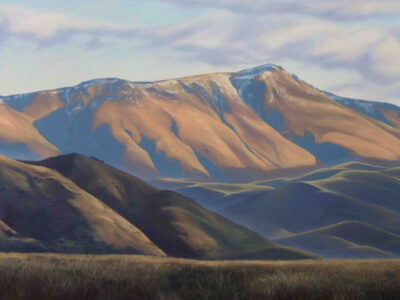
Always having been told that being an artist is not a good career choice, Julia was disappointed with her art education at school. “We never even looked at the Old Masters and were solely focussed on Modern Art – I didn’t enjoy that very much.”

 JOYOUS ARTISAN
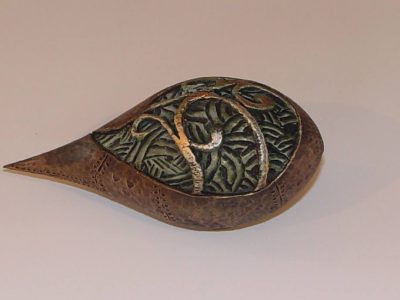
“Giving up everything to go to France to study full-time was very hard. Not being able to speak French and having to be immersed in the school and classes full-time was exceptionally hard.”

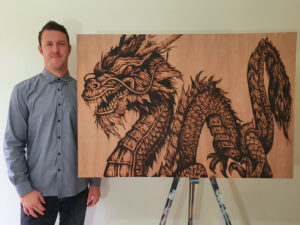
The artist life started for Daniel at a very early age, “As a young child my parents encouraged my artistic abilities. By year two of primary school, my father Roger would sit with me for hours, teaching me how to draw realistic people, muscle cars, fighter planes, architectural buildings with two-point perspective etc. We didn’t have much but wherever I went I would have a small pad and pencil, taking inspiration from my surroundings, nature, birds, people, cars, buildings, that sort of thing.
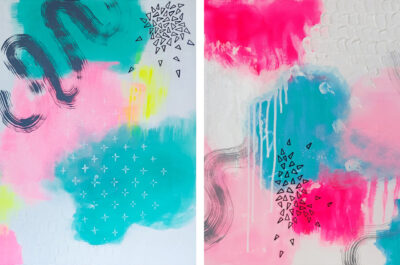
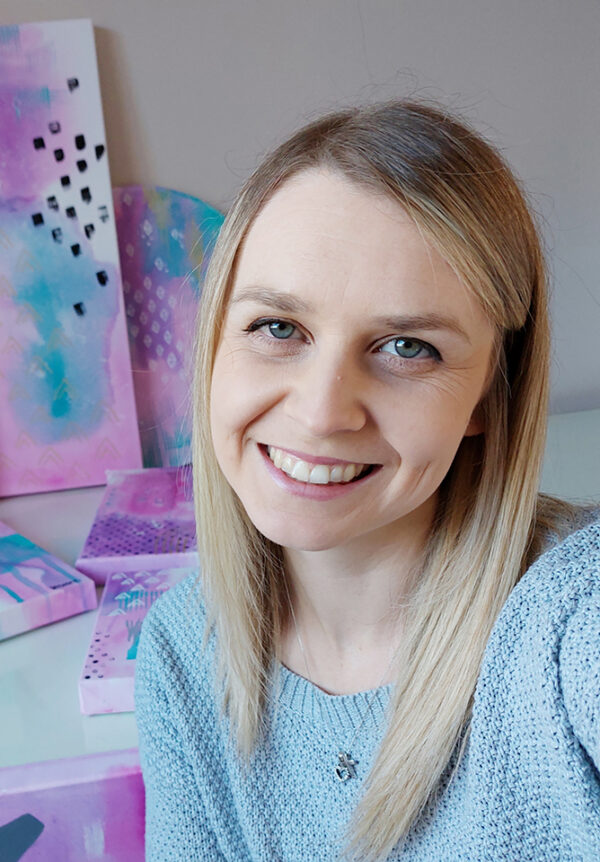
Stacey pursued a career in Early Childhood, studying a Bachelor of Teaching in Early Childhood Education and has spent the last thirteen years teaching. “Over this time I engaged in various arty projects in my spare time but once I became a mother I didn’t create much art. I got back into painting at the beginning of 2022 when my youngest child was three years old. As a perfectionist I felt prompted by God to let go of my fear of failure before I started painting again, which I did and I’ve been painting freely ever since.”

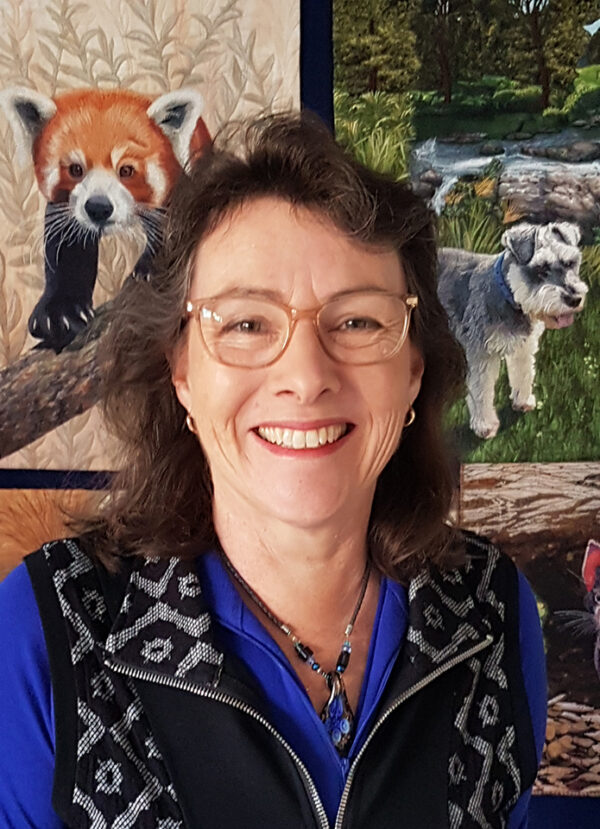
Sonya has always managed to fit in daily practice in her studio, but has only recently been creating on a full time basis. “I love making works that draw in an audience and start a discussion. I enjoy commission work, and take great pleasure seeing joy on the faces of people when they receive their favourite pet replicated with thread.”
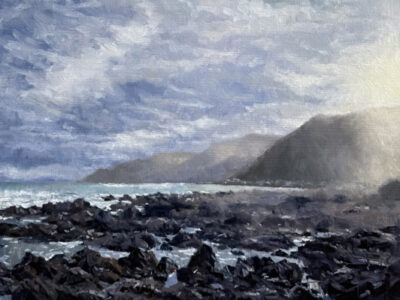
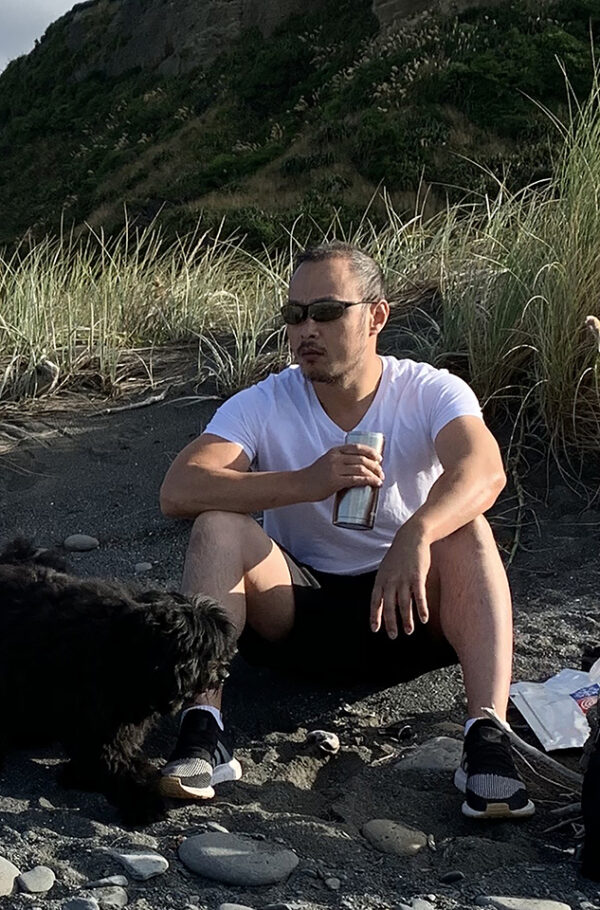
Iwen grew up in Maungaraki, Lower Hutt and went to Puketiro primary, Hutt Valley high school and then Victoria university. “I went to university to study accounting and commercial law and then I qualified and worked as a chartered accountant. While at work one day I drew a picture of my dog, Gus, on the whiteboard. An older lady who was an artist asked my boss Marie who the artist was. She approached me and asked if I had ever tried oil painting. Growing up I wasn’t really exposed to the arts and I didn’t even know what a canvas was. She offered to bring her student grade oil paints for me if I wanted to give it a try. I was reluctant at first but I found it relaxing and I really enjoyed the creative process. However, accountancy is quite different from pursuing a career in fine arts.”


Creating is what makes Bryony happy, “I feel very off kilter if I’m not creating. I’ve had a few different careers with a high element of stress, also interesting life experiences that have contributed to me wanting to focus on my art.” Being an artist gives her the freedom to explore all the different things that excite her. “I have way too many ideas floating around my head to not follow through! Sometimes I definitely feel like there isn’t enough time to cover or discover all the ideas in my head!” She also plays flute and piccolo in a couple of orchestra and chamber groups.


My artistic journey began by accident. When I was in my early teens I would paint and draw for school homework (or just for fun). I’d draw things I was interested in - such as birds and fish. One day I painted a portrait of my pet Siamese fighting fish. I posted the end result online to a group of tropical fish enthusiasts. Almost immediately I had comments asking me whether I would take commissions and if I could ship internationally. It was quite overwhelming, as I was in my early teens at the time - I had no idea if I could even send art outside of New Zealand. My first commissioned piece was completed at age 15 and was shipped to the United Kingdom. My artistic career snowballed from there. Once my first commission arrived in the UK, the owner posted the piece online, bringing more queries and future commissions. Before this, I had never thought about selling my artwork.


It’s hard for Wake to pinpoint how he ended up being an artist. “Anyone who does anything slightly creative is an artist to me, but to define it to something more specific, I started to take it seriously when a friend of mine made a social media page for me around the end of 2020, to exhibit and possibly sell some pieces. A couple of years ago, I would never have dreamed of people wanting to pay actual money for the things I draw. However, I sold a piece to a guy all the way in the USA which I’m pretty proud of, it’s very humbling.”
You cannot copy content of this page