
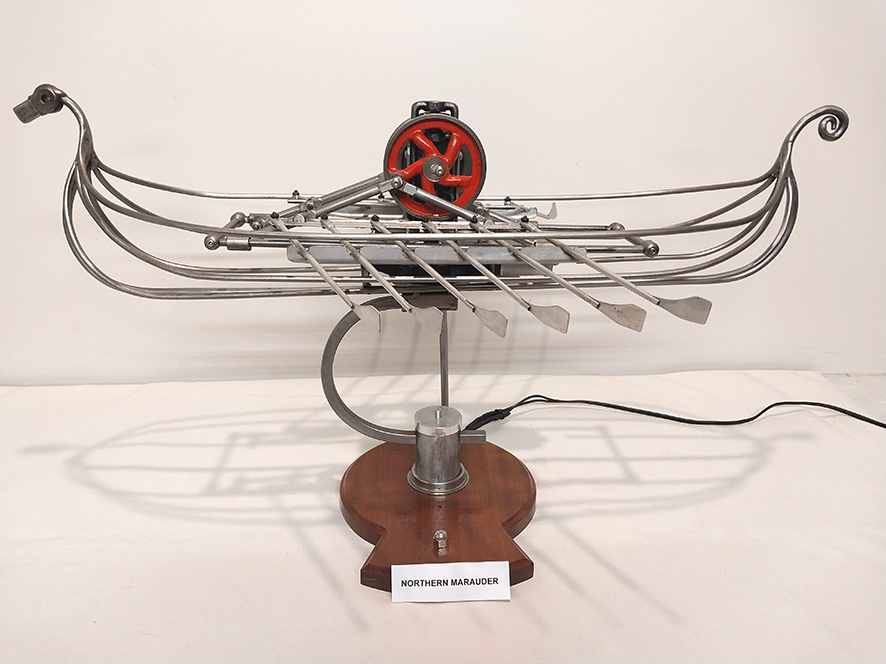
ABOVE: NORTHERN MARAUDER. Size: H 400mm W700mm. Material: Steel, wood, aluminium, electric motor. Kinetic sculpture with oar movement to power this long ship. My ancestors are Danish dating back to Viking years. I was fascinated by the curved lines of the long ship and the sweeping action of its oars. Transferring circular motion into rowing motion was the challenge. This is still my favourite work.
An Artist by Accident
From vintage cars to kinetic sculptures, David Webster has discovered that a passion for shaping metal can lead to a whole new world of creativity.
“I became an artist by accident.” That is how David Webster describes his journey into the world of art. With no formal art training, David has spent many years working with metal, developing his skills through practical experience, experimentation and a lifelong fascination with making things.
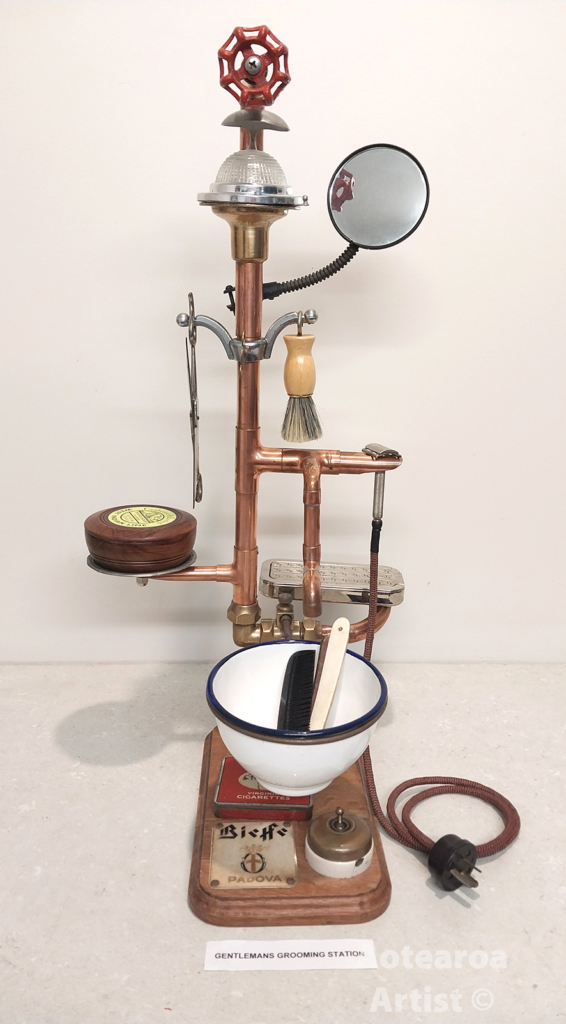
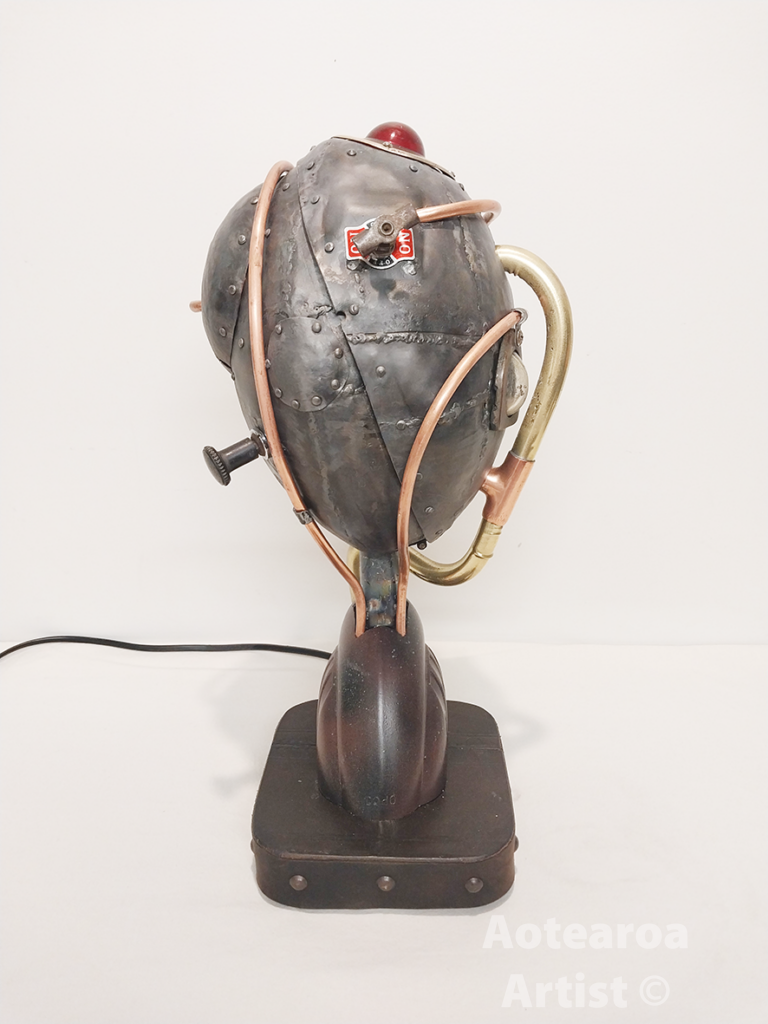
For David, the journey from builder and vintage car enthusiast to sculptor has been a natural progression. Metal shaping has always been his passion, and years spent constructing and repairing vintage car bodies have given him a sound understanding of the material and its possibilities.
“I have been making metal sculptures for many years and have only recently been encouraged to display them.”
His creative horizons widened when he began making objects with a steampunk theme. This opened a new field of possibilities and sparked a desire to explore more unusual forms and ideas. What began as a practical skill gradually developed into a more personal artistic pursuit.
His inspiration comes from many sources. He keeps a scrapbook filled with images collected from magazines, books, record covers, YouTube and photographs, along with drawings of his own. These ideas become a resource to return to when he is looking for a new challenge or direction.
There is another factor that helps drive his creativity. “Having been told several times, ‘I bet you can’t do that’, is also a motivating factor.” Rather than being discouraged by such comments, David takes them as a challenge. The desire to create something unusual, something that might not immediately seem possible, keeps him experimenting and pushing his skills further.
Inspiration, Movement and Imagination
Although David has no preferred subject, he is drawn to ideas that offer a challenge. If an idea pops into his head, he writes it down for future use. Some ideas remain on paper for a while; others develop into projects that eventually find their way into his workshop.
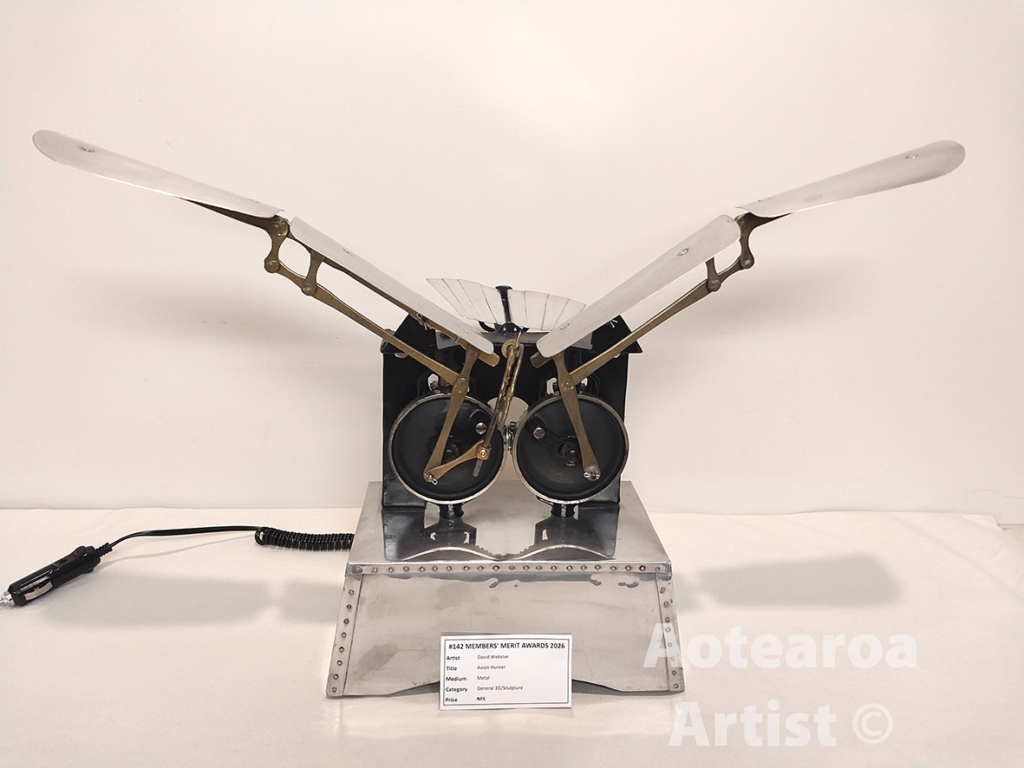
One artist whose work he particularly admires is American sculptor Bob Potts, known for his remarkable kinetic sculptures. David appreciates the way Potts combines aesthetics and movement, bringing together beautifully machined and moulded components to create works that are both intricate and visually engaging. “He rarely uses a straight line.” It is an observation that reflects David’s own interest in form, movement and the challenge of making metal behave in unexpected ways.
Ultimately, however, David creates work for himself. He wants to be able to stand back, look at a finished piece and feel satisfied with the result.
“I like to make pieces that please me. I like to look at my works and be pleased with the result. If I’m not, it is in the scrap heap.”
This straightforward approach leaves little room for sentimentality. A sculpture is not finished simply because the work has been done. It must also meet his own standards.
From a Garden Shelter to a Sculpture
David currently has two projects underway, each at a different stage of development.
The first began with a practical idea: a shelter for his wife’s garden. When a storm-damaged umbrella became part of the equation, his wife suggested that the idea might evolve into a sculpture instead. What started as a functional project took an unexpected creative turn.
It is a good example of how David’s work develops. An idea may begin with one purpose but, through observation and a little imagination, become something entirely different.
His second project involves a foot. At present, it has progressed from an idea in his head to a drawing, with the necessary materials now being sourced. From that starting point, it will gradually take shape in metal.
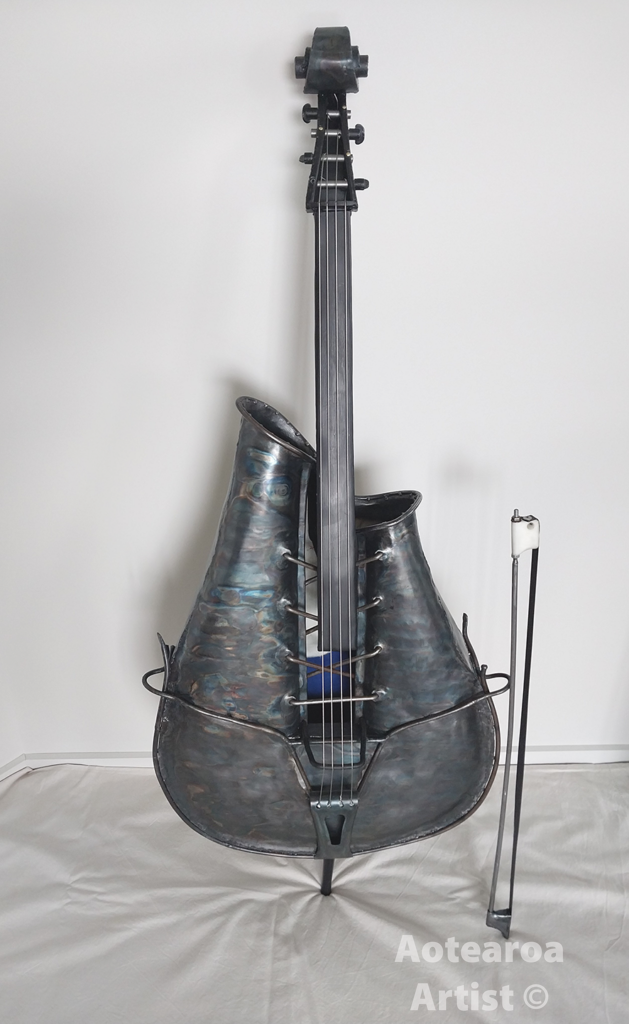
A Lifetime of Working with Metal
David’s ability to shape metal has been developed over many years, but its foundations were laid long before he began making sculptures. His father was an engineer, and David spent much of his spare time in his father’s workshop. “He taught me more in that shop than I ever learnt elsewhere.”
Those early experiences gave David a practical education that has stayed with him throughout his life. Working with tools, understanding materials and learning how things fit together became part of his everyday thinking.
He later spent many years as a builder, another occupation that demanded patience, practical knowledge and problem-solving skills. Moving from building to metal forming was a significant step, but the skills he had acquired over the years provided a strong foundation.
His long history of building hot rods has also played an important role in his development. David has built seven or eight of these distinctive vehicles, learning to appreciate the importance of stance, proportion and aesthetics.
His 1937 Ford Coupe continues to be entered in shows, keeping him connected to the motoring world that has influenced so much of his work.
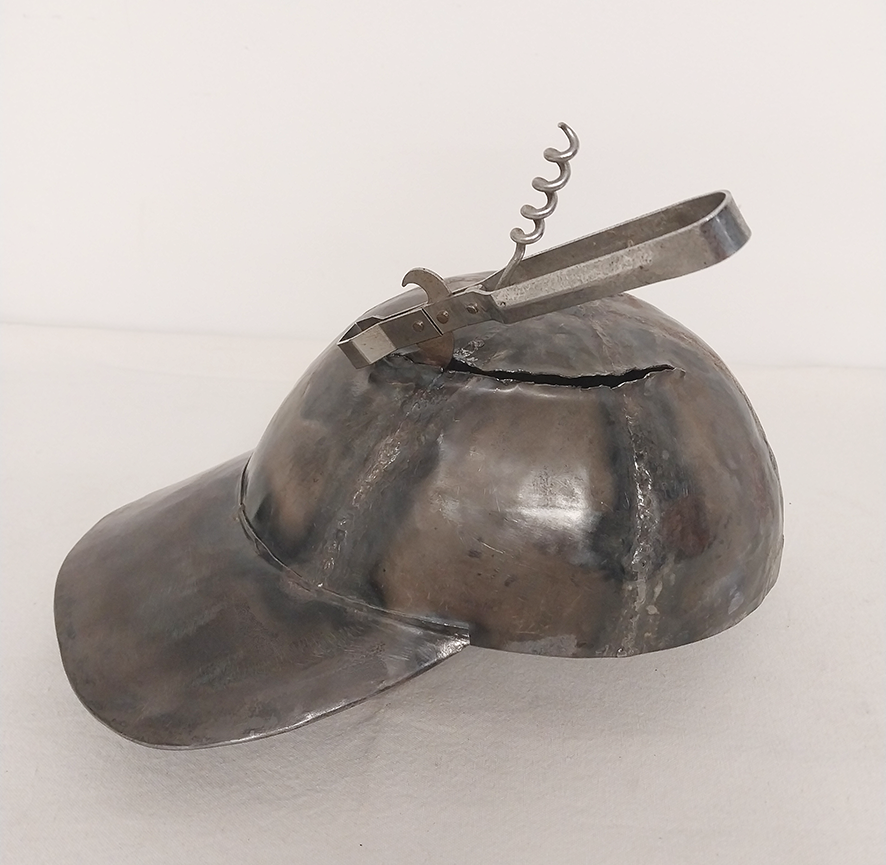
The Workshop: Where Ideas Become Reality
Steel is David’s favourite medium, largely because it presents a challenge. It is strong, demanding and sometimes difficult to persuade into the desired form. For David, that is part of its appeal.
His favourite piece of equipment is his oxy-acetylene welding set, a versatile tool that does far more than join pieces of metal together. It can heat and form metal, as well as help create colour and texture. This versatility makes it an essential part of his creative process.
David approaches each project methodically, although there is plenty of room for experimentation along the way. An idea begins in his head, where he considers how the finished piece might look and, if movement is involved, how it might work.
For kinetic sculptures, he often starts with cardboard shapes laid out on a wooden table. This allows him to test the arrangement and movement of the components before committing to metal. Adjustments can be made easily at this stage, saving time and effort later.
If the design works, he moves on to assembling the moving parts with the help of a vintage Meccano set. Once satisfied with the mechanism, he begins constructing the basic frame, adding components as they are machined or welded.
Metal forming follows, creating the outer skin and giving the sculpture its final shape. Colour and texture are then added to complete the work. “Next stand back and look.” That final step can determine whether a sculpture is finished, needs further work or is destined for the scrap heap.
Not every project succeeds. David has discarded completed sculptures that, after closer inspection, simply did not meet his expectations. Others have been pulled apart because he believed they could be improved. Sometimes the entire idea has had to be abandoned.
When he is deeply involved in a project, even the local radio station becomes little more than background noise. He enjoys having it on while he works, but when concentration takes over, he often stops hearing it altogether.
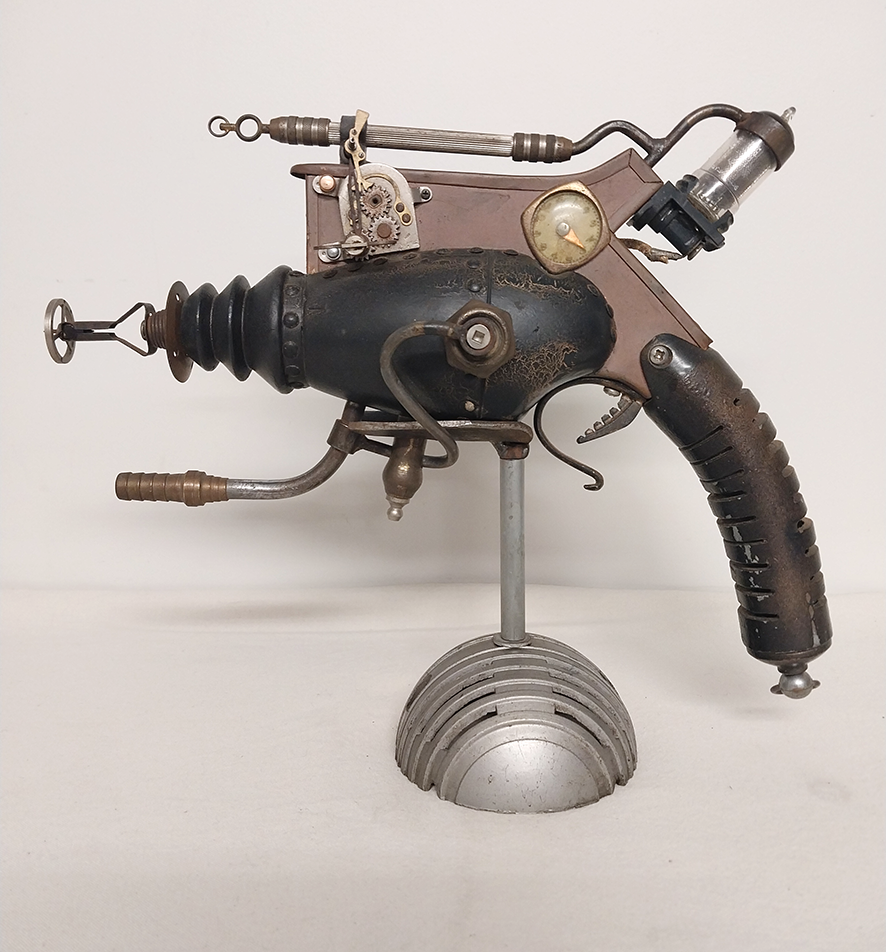
Art, Cars and Community
Although much of David’s creative life revolves around his workshop, he also values the people and activities that connect him with the wider community. He serves on the committee of a car club and is a member of the local Art Centre. He and his wife are also members of a Garden Club.
The car club provides an enjoyable social outlet and brings him into contact with people who share his enthusiasm for vehicles. Car events and shows take up a considerable amount of his time, but they remain an important part of his life.
Membership of the Art Centre, meanwhile, has introduced David to people whose involvement in art is very different from his own. “There are so many different forms of art and meeting people involved has opened a new chapter for me.”
For someone who describes himself as an accidental artist, these connections have helped broaden his understanding of what art can be. They have also provided opportunities to meet other creative people and share experiences beyond the workshop.
At home, David is happy to lend a hand in the garden when needed, particularly when digging or lifting is involved. He sees the garden as a calming part of their property, offering a welcome contrast to the noise and physical demands of metalworking.
Family life is equally important. Between car events, club activities, garden duties and his creative projects, there are also twelve grandchildren and two great-grandchildren to enjoy. There is never a shortage of things to do.
No Rules, No Surrender
Ask David what advice he would give to someone starting out in art, and his answer reflects the determination that has carried him through years of making, modifying and experimenting. He turns to Winston Churchill for the words that sum up his philosophy: “We shall never surrender.”
For David, the message is clear. Never give up, do not listen to the naysayers and follow your own instincts. Formal training is not the only path to creativity. Experience, curiosity, persistence and a willingness to learn can all lead to unexpected places. A skill developed for one purpose can become the foundation for something entirely new.
David Webster may have become an artist by accident, but the dedication behind his work is anything but accidental.
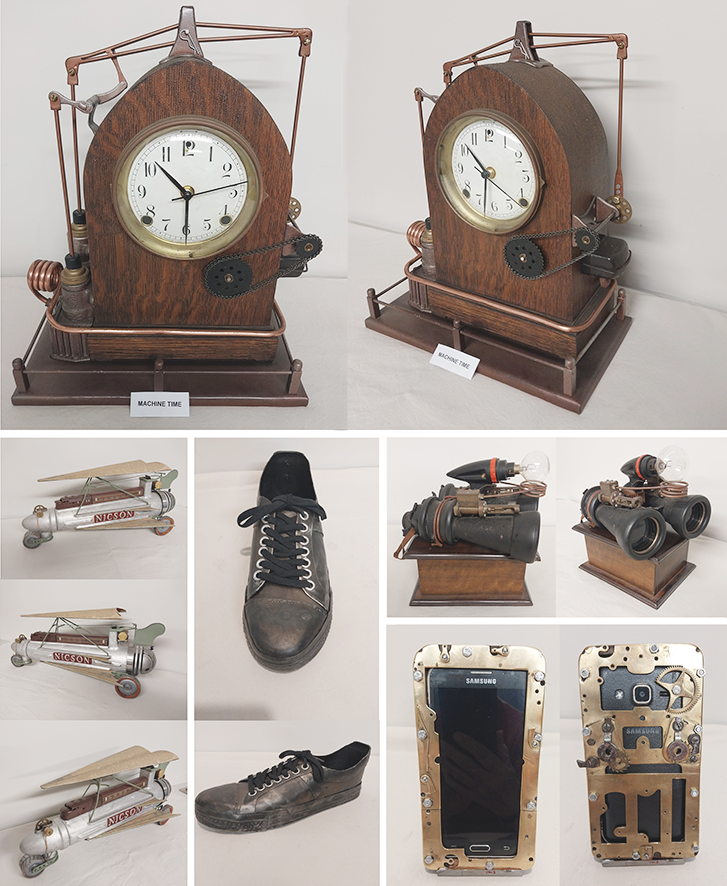
BOTTOM Left to Right: NICSON WANDERER Size: H330mm W650mm Material: Steel, aluminium, wood, vintage model railway parts, fibreglass, automotive parts. My mind wondered what a space shuttle may have looked like in 1937. I found the main body in some marine parts that were discarded. The proportions were right and the rest fell into place as the sculpture progressed. The patina of the aluminium, old model parts and glass resin suited the piece. The name was already cast into the main body.
SNEAKER. Size: 9 H90mm W290mm. Material: Steel. This size 9 left foot sneaker is another (bet you can’t do that) sculpture. The challenge of shape, look texture and assembly with no welds showing proved too much to resist. There won’t be a right foot sneaker.
BINOCULARS. Size: H160mm W230mm. Material: found binoculars, 2 model steam engines, electrical components, copper pipe. Steam punk inspired. The combination of vision, steam components and electricity make a confusing piece. The vintage binoculars have an old-world patina to match other parts.
ELECTRIC COMMUNICATION. Size: H 160mm W90mm. Material: Cellphone, brass, wood. New world communication device with old world charm. The frame of a mantel clock is reconfigured to surround a cell phone. Hardwood sides space the two faces and small modellers bolts hold it altogether. I won’t lose this one.